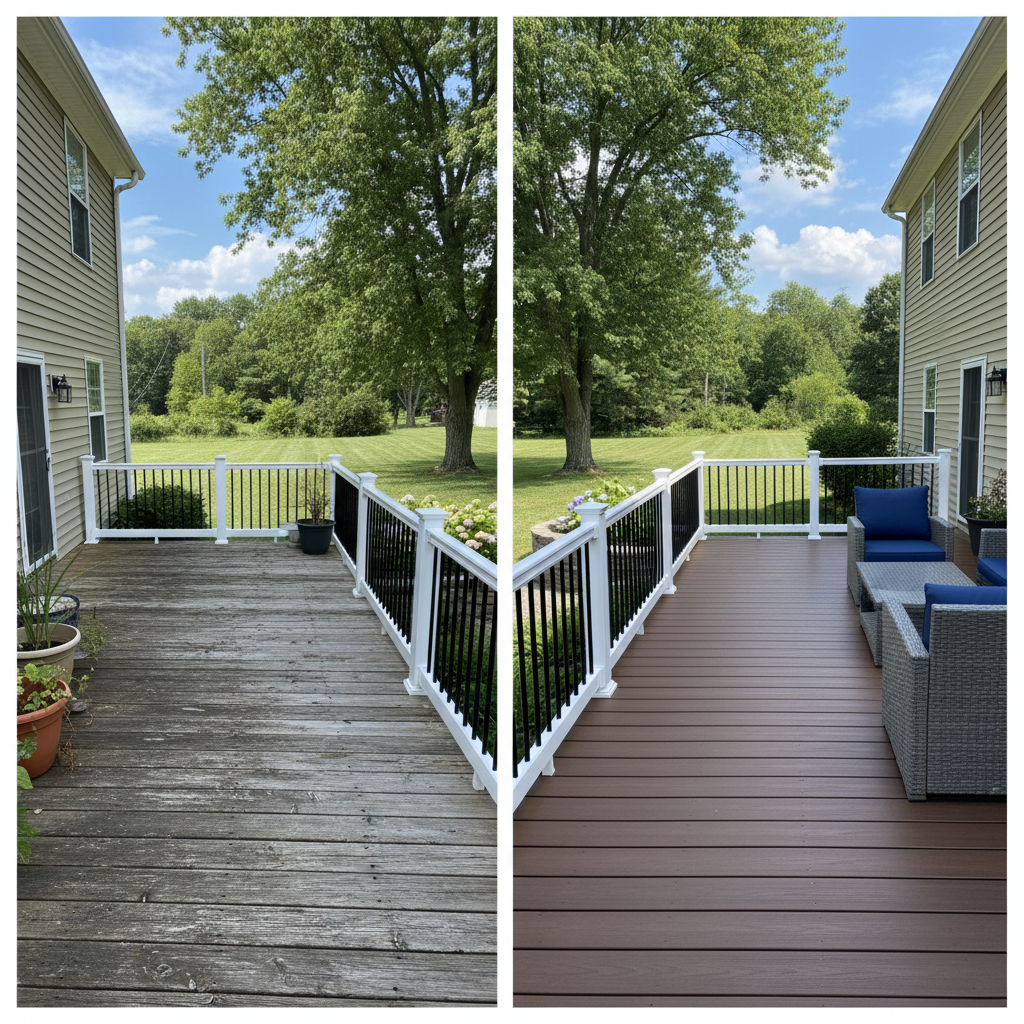
You've decided on composite for your new deck, smart move. It's tough, looks great, and you won't be staining it every other year like a pressure-treated pine deck. But once you pick your color and brand, there's another big decision that often gets overlooked until we're on site: how are we actually going to attach those boards? We're talking about hidden fasteners versus traditional face screws.
Hidden Fasteners: The Clean Look
When I talk about hidden fasteners, I'm usually referring to clips that fit into a grooved edge on the side of the composite board. These clips attach to the joists below, holding the board down without any visible screws on the deck surface. It's a really clean look, no doubt about it. You get a smooth, uninterrupted surface, which is a big draw for a lot of folks.
Pros of Hidden Fasteners:
- Aesthetics: This is the big one. No screw heads showing means a very sleek, modern finish. It just looks high-end.
- Foot Comfort: You're not going to snag a sock or stub a toe on a proud screw head. Great for bare feet, especially around a pool.
- Board Expansion: Many hidden fastener systems allow for a little bit of natural expansion and contraction of the composite boards. This can be good for the long-term health of the deck, especially with our temperature swings here in Manchester.
Cons of Hidden Fasteners:
- Cost: Plain and simple, hidden fasteners cost more. The boards themselves often have to be grooved, which adds to their price, and the clips themselves aren't cheap. Labor can be a bit more involved too, as it often takes a little longer to install.
- Repair Difficulty: If you need to replace a single board in the middle of your deck, it can be a real pain. You often have to remove several boards to get to the one you need to fix. This isn't usually an issue, but if a heavy grill falls or something, it's worth considering.
- Initial Stability: Some cheaper hidden fastener systems can feel a little less rigid than face-screwed boards right after installation. Good quality clips and proper installation mitigate this, but it's something to be aware of.
Face Screws: The Traditional Approach
Face screws are exactly what they sound like: screws driven directly through the face of the deck board into the joist below. This is how wood decks have been built forever, and it's still a perfectly valid and popular method for composite, too.
Pros of Face Screws:
- Cost-Effective: This is usually the more budget-friendly option. The composite boards themselves don't need special grooving, and good quality deck screws are less expensive than hidden clips. Labor is often quicker too.
- Strength & Stability: When properly installed with good quality screws, face-screwed boards feel incredibly solid. You're directly anchoring each board to the joist.
- Easier Repair: If a board gets damaged, it's usually a lot simpler to remove just that one board and replace it. Just unscrew it and put a new one in.
- Versatility: You can use square-edge composite boards, which sometimes offer more color or texture options, or are simply more readily available.
Cons of Face Screws:
- Visible Fasteners: The obvious downside. You'll see the screw heads. We use color-matched screws and counter-sink them for a cleaner look, but they're still there.
- Potential for "Proud" Screws: Over time, especially with the freezing and thawing we get around here in Manchester, a screw can sometimes back out a tiny bit. It's rare with good quality screws and proper installation, but it can happen, creating a slight tripping hazard or just looking a bit messy.
- Water Intrusion: Every screw hole is a tiny penetration in the board. While composite is tough, these holes are technically entry points for water, which over decades could *potentially* lead to issues, though it's usually not a major concern with modern materials.
What I Recommend for Manchester Homeowners
Look, both methods work great when done right. At Manchester Deck Concepts, we've installed hundreds of decks both ways. If your budget allows, and you're really chasing that ultra-clean, modern aesthetic, then hidden fasteners are fantastic. They truly do elevate the look of a composite deck.
However, for most of my customers here in Manchester, especially those building a deck that's going to get a lot of heavy use – kids running around, big BBQs, maybe even a hot tub – I often lean towards face screws. Why? Because the cost savings are real, and the added stability and ease of repair are practical benefits that often outweigh the aesthetic advantage of hidden fasteners. We use premium composite-specific screws that are color-matched and designed to sit flush, so the look is still very good, just not perfectly seamless.
Plus, with our crazy New England weather, from those humid summers to icy winters, having that direct, strong connection to the joists with face screws just gives me a little more peace of mind for long-term structural integrity. You're not going to regret either choice if it's installed correctly, but think about your priorities: is it ultimate aesthetics, or practical durability and budget?
Give us a call at Manchester Deck Concepts, and we can walk you through the options, show you samples, and help you decide what's best for your specific project and budget.